
COSTEÑO COLOMBIAN GUISO (HOGAO)
- Mar 8
- 3 min read
Updated: Apr 8

Colombian guiso is one of those recipes that tells a story in every bite. It is the base of many traditional dishes, which is why many cooks call it the “Colombian mother sauce”: from this tomato and onion sofrito come beans, sudados, sancochos, atollado-style rice dishes and countless homemade recipes.
Its origin lies in the Spanish sofrito, made with garlic, onion and bell pepper, which arrived during colonial times; there, Afro-descendant and peasant cooks added tomato, transforming it into the guiso we now know throughout much of Latin America, with variations from country to country and from region to region within Colombia.

On the Caribbean coast, guiso has its own personality: more red onion than scallions is used, many families add less tomato, and sweet ají is traditionally added to give it aroma and depth. In my costeño version, living in Germany, I adapt the recipe by using plenty of tomato (because I love it juicy) and replacing the sweet ají with sweet paprika powder, which is easy to find here and gives it a delicious color and flavor.
I use this guiso to prepare lentils, beans, scrambled eggs (huevos pericos), chicken sudado, meats, potatoes and boiled yuca, and even as a base for a good shrimp or seafood encocado. You ca also eat it with arepas, yuca, patacones and boiled potatoes,

Costeño Colombian Guiso (Hogao)
Ingredients:
2–3 stalks scallions
2 large red onions
5–6 large tomatoes, grated
2 cloves garlic, finely chopped
1/2 teaspoon sweet paprika, or to taste
Salt to taste
Vegetable oil (as needed for sautéing)

Preparation:
Sauté the onion and garlic
Add a little oil to a pan and heat it over medium heat.
When it is hot, add the chopped scallions and finely sliced red onion, along with the chopped garlic. Sauté for about 5 minutes, stirring occasionally, until the onion is translucent and fragrant.
Add the tomato and spices
Stir in the grated tomatoes. You can also use them chopped, but grating them helps you get more of the tomato juice and makes the guiso more homogeneous.
Add the sweet paprika and a pinch of salt. A good trick is to add that pinch of salt at this point to help the vegetables release their juices and make the guiso more flavorful.
Cook over low heat
Cook over medium heat with the lid on until the mixture begins to simmer gently.
Once it comes to a boil, reduce the heat, cover again and cook for another 15 minutes, stirring occasionally so it does not stick. The guiso should be juicy, with the tomato well integrated and the onion very soft.
Enhance the flavor with longer cooking (optional)
If you prepare a generous amount of guiso and want it to be even more concentrated and delicious, after it comes to a boil you can leave it covered over low heat for 25 to 30 minutes.
Just make sure to stir from time to time and adjust the salt if needed.

Red onion 
spring onion 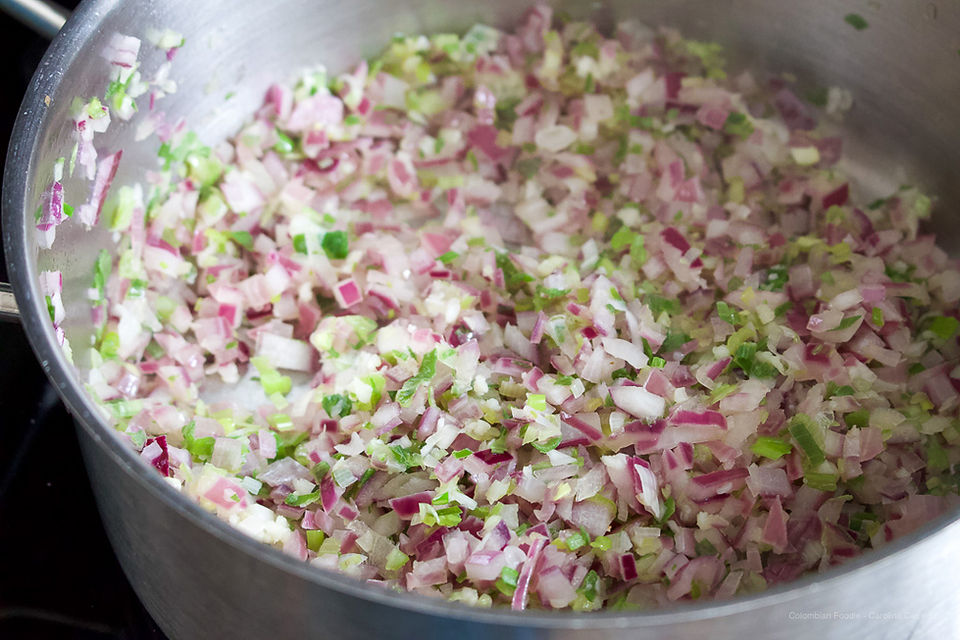
cebollas 
guiso colombiano
Storage, uses and flavor variations
This costeño guiso is perfect for many preparations: lentils, beans, scrambled eggs with scallions, to eat it with boiled potatoes or boiled yuca, to prepare shredded chicken, chicken or beef sudado, or as a base for a shrimp or seafood encocado.
If you make a large batch, store it tightly covered in the fridge for up to 3 days. You can also freeze it in small portions so you always have some on hand to add, for example, to quick weekday scrambled eggs.
If you want to play with flavors, you can add a little turmeric powder for extra color, or incorporate ground cumin or ground cilantro, depending on the dishes you plan to prepare with the guiso.
Thank you so much for your visit! Did you like this post? Follow me on our social media channels to see more recipes and learn more about my life in Germany!


